In industrial environments, downtime is rarely caused by a single major failure without warning. More often, it develops gradually through small issues that go unnoticed until they create larger problems. A minor fault becomes a larger repair, a small performance issue affects efficiency, or a seemingly insignificant component fails and interrupts an entire process.
Businesses typically invest heavily in major equipment such as machinery, heating systems, production lines and monitoring systems. However, the smaller supporting components within those systems often receive far less attention despite playing an essential role in overall reliability.
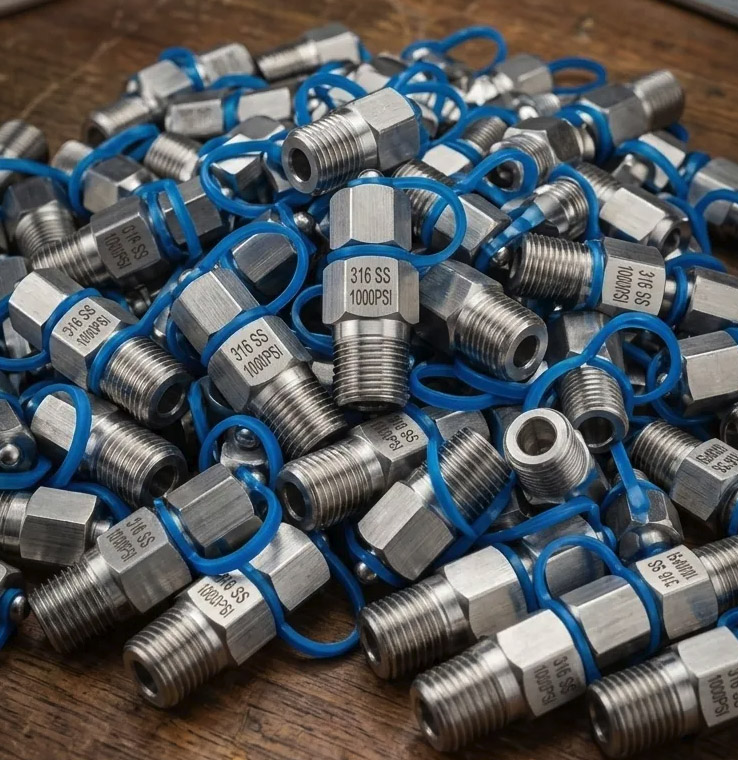
High=temperature test points are one example of a small component that can have a significant impact on performance, maintenance and operational continuity.
While they may represent only a small part of a system, they help provide the accurate information needed to keep equipment operating efficiently and to identify potential problems before they become expensive failures.
The Real Cost of Downtime
Most organisations understand that downtime costs money, but the true impact often extends beyond immediate repair expenses.
When equipment unexpectedly stops operating, businesses may experience:
- Lost production time
- Delayed deliveries
- Increased labour costs
- Wasted materials
- Emergency maintenance expenses
- Reduced customer satisfaction
In some industries, downtime may also create safety concerns or compliance issues.
The financial impact can quickly become substantial, particularly if problems are not diagnosed quickly.
What makes this more frustrating is that many failures are preventable.
Small Problems Often Become Bigger Problems
Equipment rarely moves from fully operational to complete failure instantly.
In many cases there are early warning signs:
- Small temperature increases
- Reduced efficiency
- Unexpected fluctuations
- Changes in system performance
- Components operating outside normal ranges
These changes can occur gradually over weeks or months.
The challenge is that they are difficult to detect without accurate monitoring and reliable testing methods.
If temperature data is inconsistent or unreliable, maintenance teams may miss signs that equipment performance is beginning to change.
By the time an issue becomes obvious, repairs are often more expensive and disruption is greater.
Why Temperature Monitoring Matters
Temperature is one of the most useful indicators of system health.
Abnormal temperature changes can indicate a wide range of issues including:
- Excessive friction
- Component wear
- Blockages
- Electrical faults
- Overloading
- Reduced efficiency
Because temperature often changes before complete failure occurs, it can provide an early warning that maintenance action may be required. However, the usefulness of temperature data depends entirely on its accuracy.
Poor measurement methods can create uncertainty and make troubleshooting more difficult.
A maintenance engineer faced with inconsistent readings may struggle to determine whether a problem actually exists or whether the measurements themselves are unreliable.
The Role of High Temperature Test Points
High temperature test points provide a dedicated and repeatable location for temperature measurement.
Rather than relying on temporary probe placement or inconsistent testing methods, they create a controlled point where accurate readings can be taken repeatedly over time.
This helps improve confidence in the data being collected.
Reliable measurement points help maintenance teams:
- Identify changes earlier
- Monitor trends more effectively
- Diagnose problems faster
- Reduce unnecessary inspections
- Improve maintenance planning
The result is better visibility into system performance and fewer unexpected issues.
Better Maintenance Decisions Lead to Less Downtime
Many businesses are moving away from reactive maintenance models where repairs only happen after equipment fails. Instead, organisations increasingly focus on preventative and predictive maintenance strategies. These approaches rely heavily on accurate information.
If measurement data cannot be trusted, maintenance becomes more difficult to plan effectively.
For example, imagine a heating system showing a gradual rise in operating temperature over several months.
Without reliable testing, the change might be dismissed as measurement variation.
With consistent temperature monitoring, maintenance teams can recognise that a component is beginning to degrade and take action before a failure occurs.
A relatively small repair completed during scheduled maintenance may prevent hours or even days of downtime later.
Why Small Components Are Often Overlooked
Large pieces of equipment naturally attract attention because they represent a significant investment.
Smaller components tend to be viewed differently.
Because they are inexpensive compared with major machinery, businesses sometimes assume they have limited impact on performance.
In reality, systems depend on every component working together effectively.
A missing seal, worn fitting, poor connection or unreliable measurement point can all create operational problems far larger than their size would suggest.
The cost of a small component is often insignificant when compared with the cost of production delays or emergency repairs.
Looking at Reliability as a Whole System
Reliability is rarely about one individual part. It comes from designing systems that support long-term performance at every level.
This includes:
- High-quality equipment
- Accurate monitoring
- Reliable testing methods
- Effective maintenance planning
- Durable supporting components
The smallest elements within a system often contribute more than expected.
High temperature test points may not be the most visible part of an operation, but they can help provide the information required to maintain reliability and reduce uncertainty.
Final Thoughts
Unexpected downtime can affect productivity, profitability and customer confidence. While large failures attract the most attention, they are often caused by smaller issues that develop unnoticed over time.
Accurate monitoring and reliable testing help identify problems before they become serious.
Small components such as high temperature test points support this process by improving measurement consistency and helping maintenance teams make better decisions.
When businesses focus on reliability across every part of a system, even the smallest components can make a measurable difference.
